
The People’s Garden – Volunteer Update
The initial three months of volunteering have centred on two distinct areas within the Park, with teams tackling both formal and wilder spaces.
The first gathering after New Year provided some relief to attendees, as it took place indoors. This joint discussion with park staff focused on planning the upcoming programme. The decision to meet inside was a welcome one, as outside temperatures were freezing and an arctic wind dampened enthusiasm for any outdoor tasks.
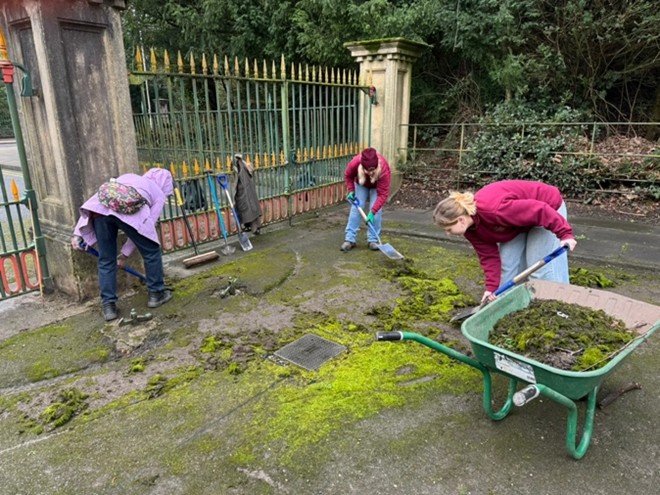
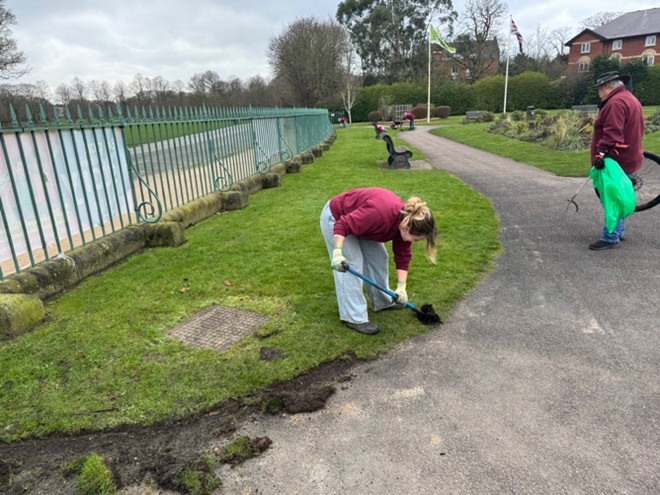
After clearing moss from Park Drive by the Ashville Road gates, the small-tools crew have worked steadily to improve the beds and paths surrounding the Visitor Centre. If left unattended, grass encroaches on paths and diminishes the crispness of the formal beds. Warm spells encourage weeds to germinate, weaving their way between plants and forming a dense mat. By spring, these weeds conceal their invasive nature with pleasant colours, all while threatening to choke out perennials carefully selected to provide interest throughout spring, summer, and autumn. Persistent weeding since January has curbed their progress, although the work is undeniably strenuous and backbreaking.
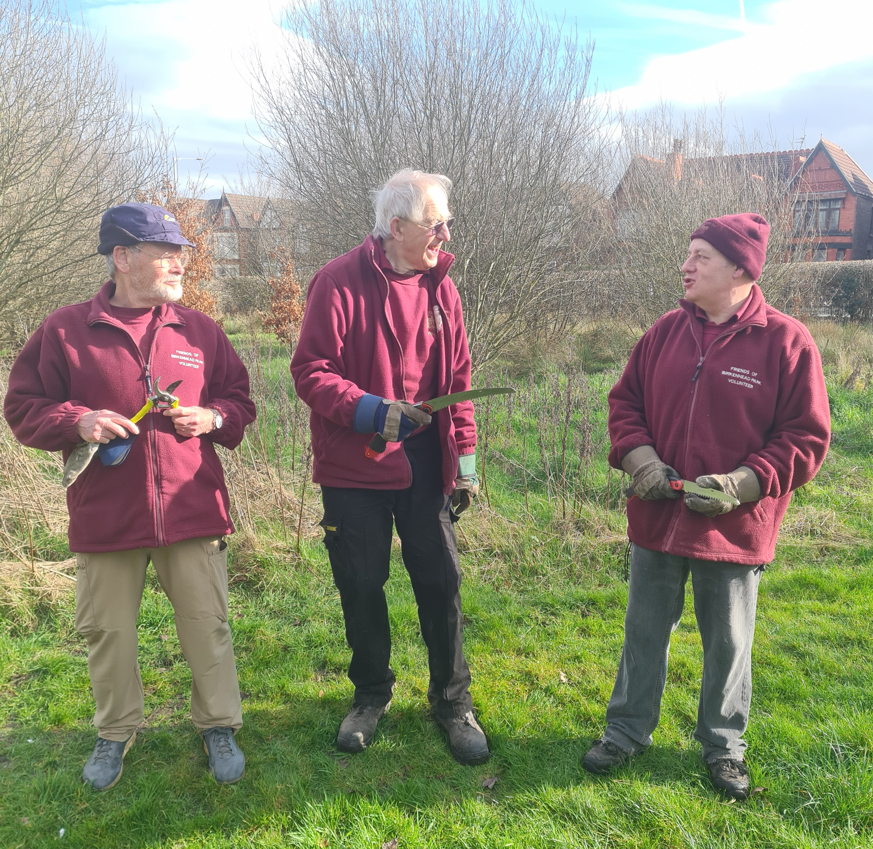
Elsewhere, the heavy-duty crew have advanced into the overgrown wild jungle area by Park Road East. This section has become naturalised and progressively more wild over time. During the park restoration in the 2000s, silt from the lakes had to be deposited and spread here. Changes in agricultural policy prevented the silt from being freely spread on low-grade land in west Wirral, and disposal at waste sites proved to be prohibitively expensive. Fortunately, half of the silt was used by the Mersey Forest at Bidston for landscaping, while the remainder was contained on land outside Paxton’s original plan, within Park Drive. Although this area is outside the proposed World Heritage Site, it does fall within the buffer zone.
In summer, the leaves of willow will offer a shady retreat during heatwaves. Bramble thickets are gradually being cleared, with hedge clippers removing old and new branches. This process reveals a surprising collection of discarded cans and bottles, representing a social history of popular drinks such as cider, beer, ice cream soda, and cola. The dates on these containers reflect changing tastes and fashions for drink consumption over time.
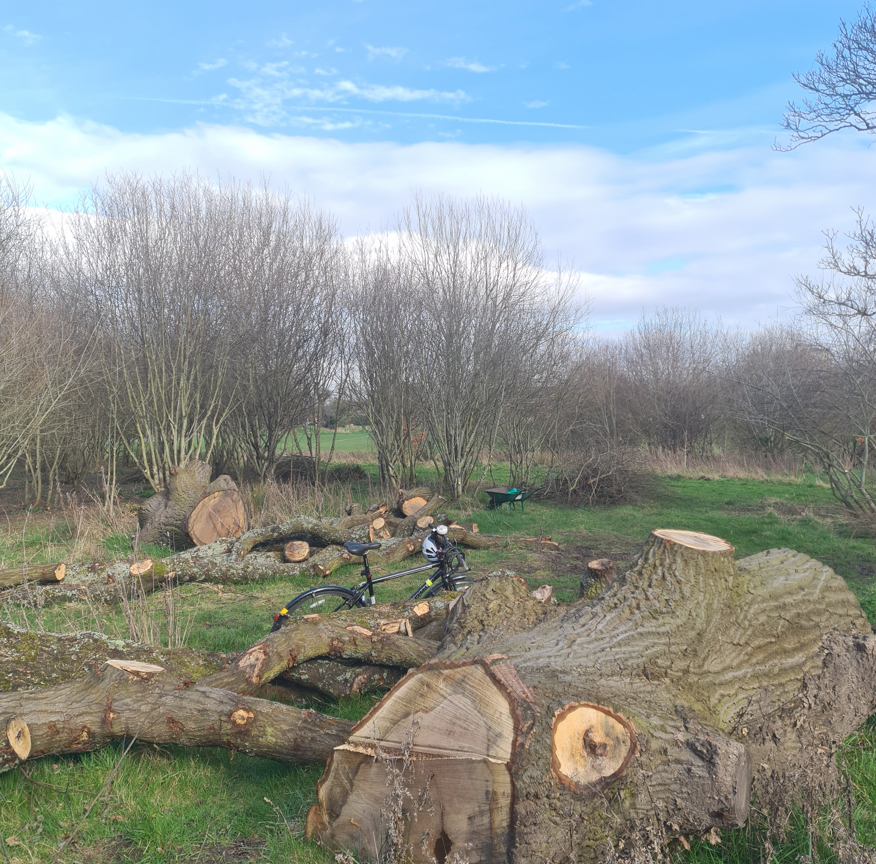
This area has recently become a resting place for mature trees that have fallen elsewhere in the Park. Their presence here is now more noticeable, but at least they have been removed from more sensitive parts of the designed landscape.
Often overlooked, a dedicated group of volunteer litter pickers continue their vital task of keeping the Park tidy. Their familiarity with litter hotspots is unmatched. Readers are encouraged to express their appreciation for this small army of volunteers.
Graham Arnold